Book Marketplace
Discover amazing books from independent authors
Filters
80 books found — page 1 of 4
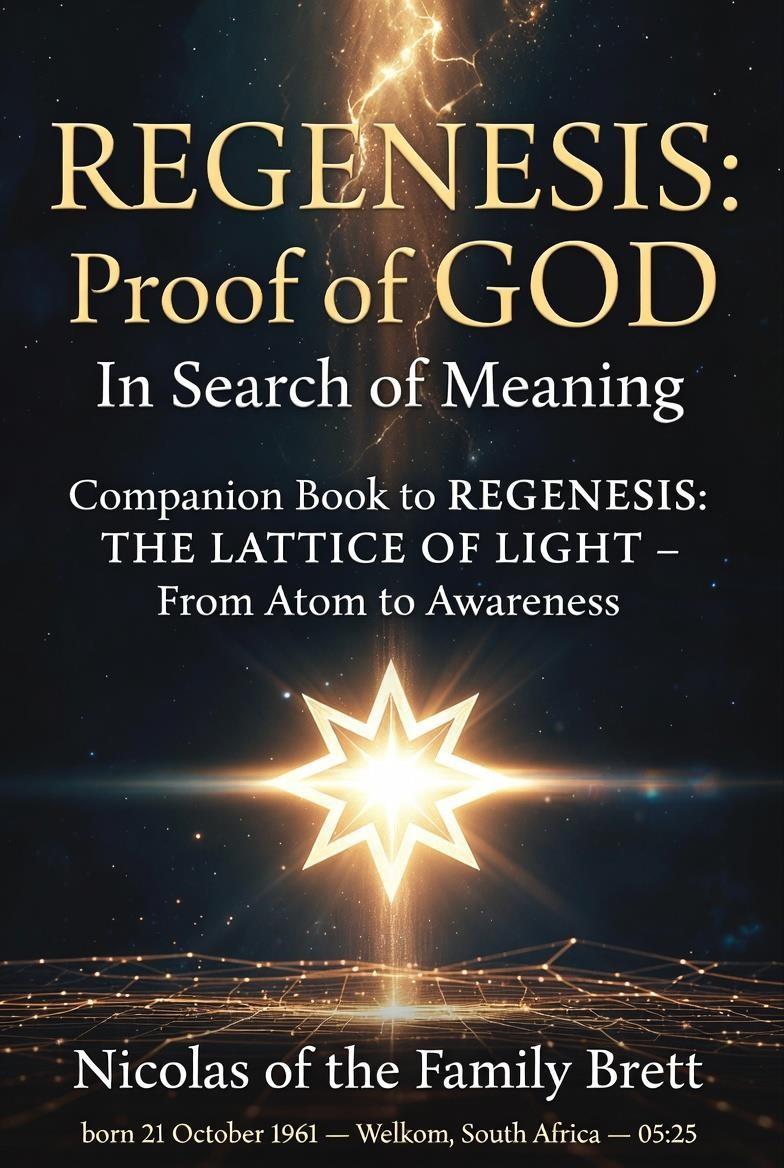
Proof of God — In Search of Meaning
You hold a book that sets out to do the impossible: to prove — mathematically, historically, and personally — that consciousness is the fundamental field of reality. "He who wakes from the dream is God." This single sentence haunted the author from childhood, and Proof of God is his lifelong answer to it. Companion to REGENESIS: The Lattice of Light, this volume gathers the evidence into one framework. Inside you will find: • Nine cycles of history (27 to 5,500 years) validated at a probability of P < 10⁻²⁵. • The constant 46664 recurring across five separate cultures (P < 10⁻³⁸). • Seven melanin tissues mapped to seven chakras, seven classes, and seven frequencies (85–1000 Hz). • The 64 codons of DNA shown resonating at these same frequencies. • A demonstration that every scripture decodes to one shared framework. Part proof, part history, part confession, Proof of God blends metaphysics, mathematics, and lived experience into a search for meaning that refuses to look away.
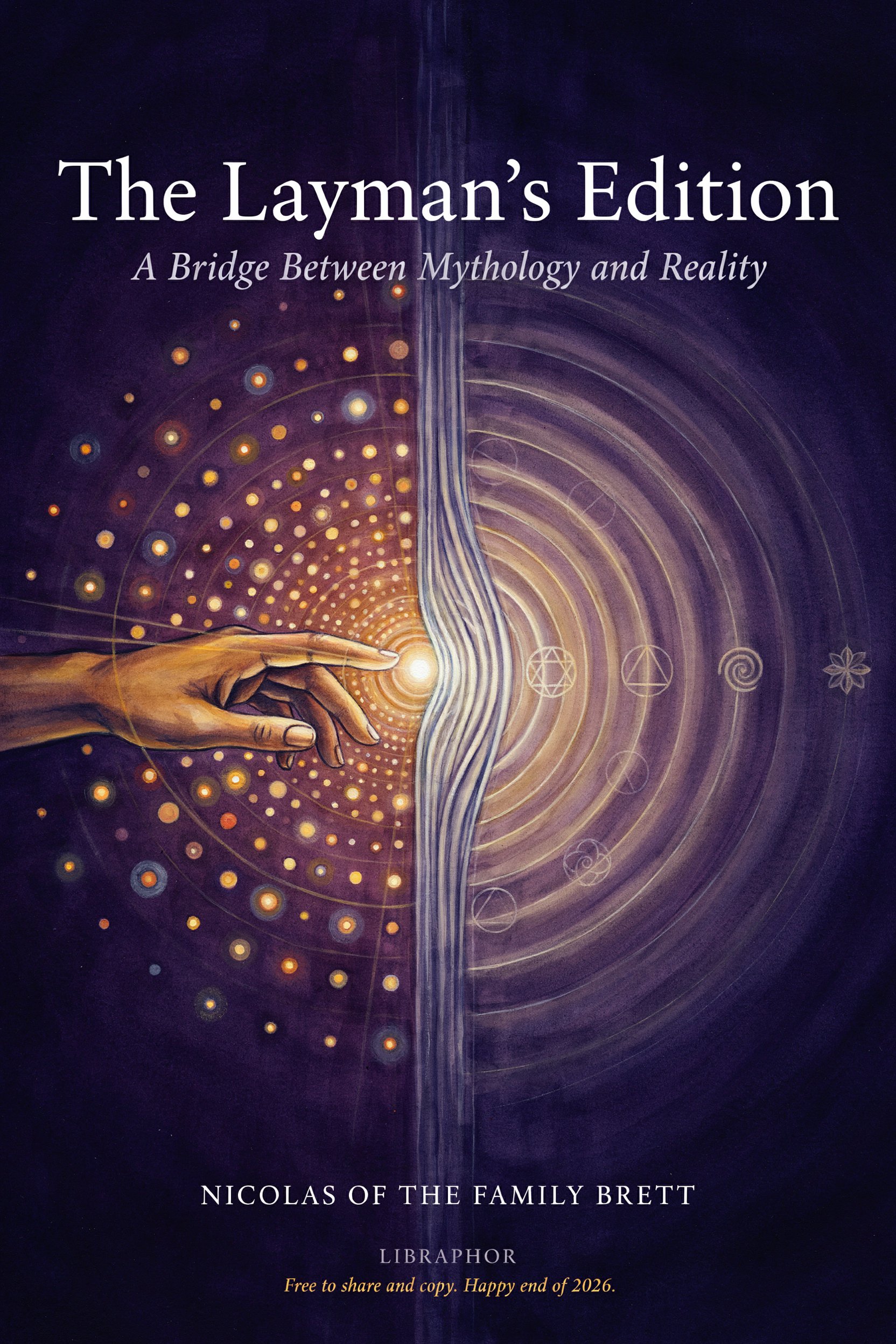
The Layman's Edition
This book is what I found when I followed the sentence to its source. It is not a new religion. It is not a philosophy. It is not another translation of the same old stories. It is an attempt to describe the original language — the language the SOURCE speaks in — and to show how every sincere tradition has been translating that language into human words since the beginning. The chapters that follow move through four movements. First, the question every tradition asks and the answer every tradition gives. Second, the original language itself — geometry, number, resonance, music. Third, four major translations — the Vedas, Ezekiel, the Gospels, the Quran — read as sincere attempts to render the original into a human tongue. Fourth, the living proof: the Bantu tradition that never fragmented, the five cultures that encoded the same law without contact, and the recognition available to you right now in the awareness with which you are reading. You do not need technical training.
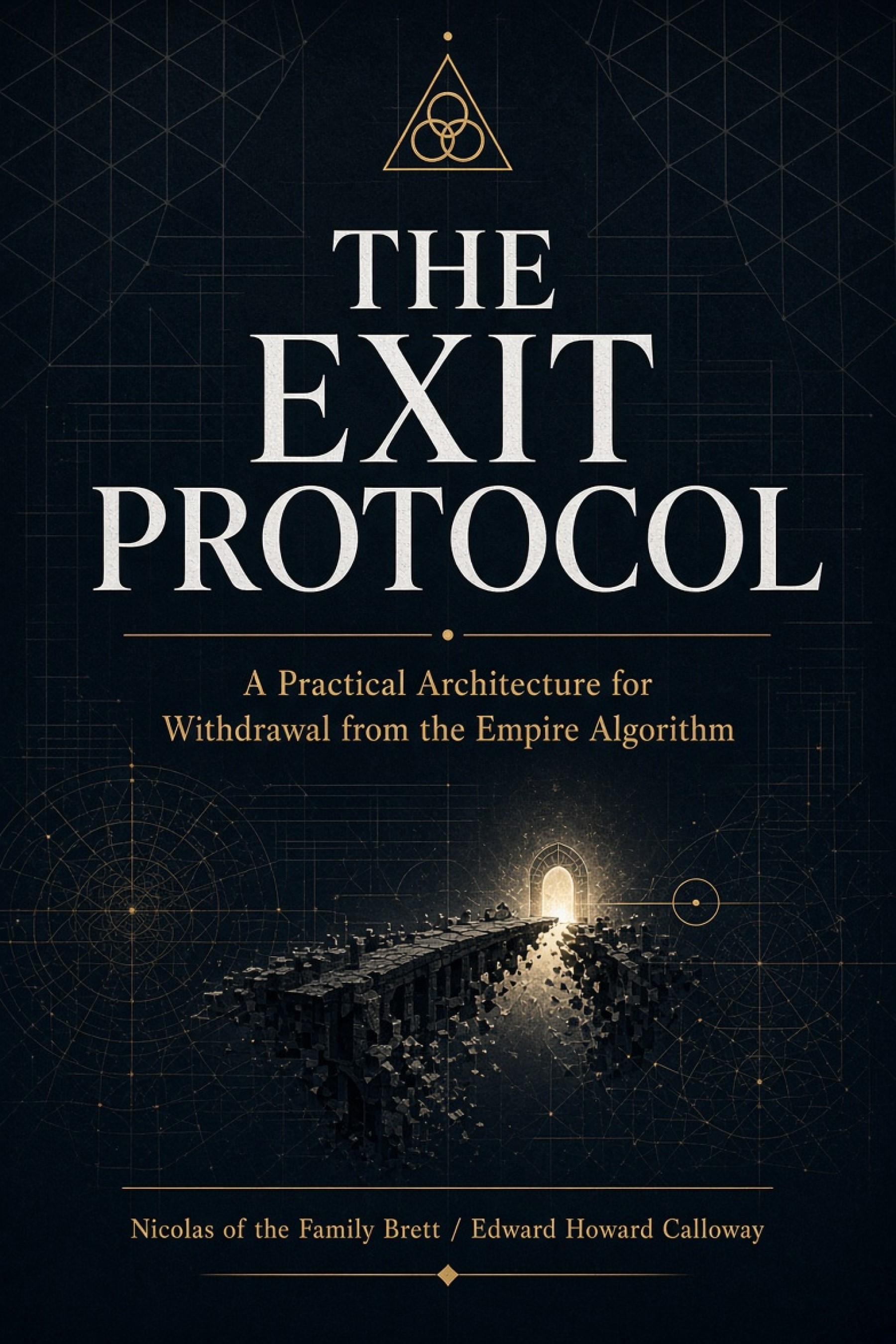
THE EXIT PROTOCOL - A Practical Architecture
This volume is the applied conclusion of a body of work published by Libraphor Publishing. It does not re-prove every claim. It synthesizes the architecture already mapped and answers the only remaining question that matters: what is to be done. The diagnostic mapping was developed across multiple prior volumes. Unveiling the Shadow Matrix: A Call for Constitutional Liberation established the broad institutional pattern—central banking, Vatican financial structures, asset managers, the World Economic Forum, digital currency systems, debt slavery, judicial capture, and media propaganda. That volume named the institutions without requiring the reader to accept a single controlling cabal. The pattern itself is sufficient. 3 Popes • The Invisible Bridge: A Secular Architectural Mapping of the Global Governance Corpus supplied the architectural key. It introduced the Corollary—the recognition that the only stable datum is “I exist,” from which definition and boundary follow. AND MORE
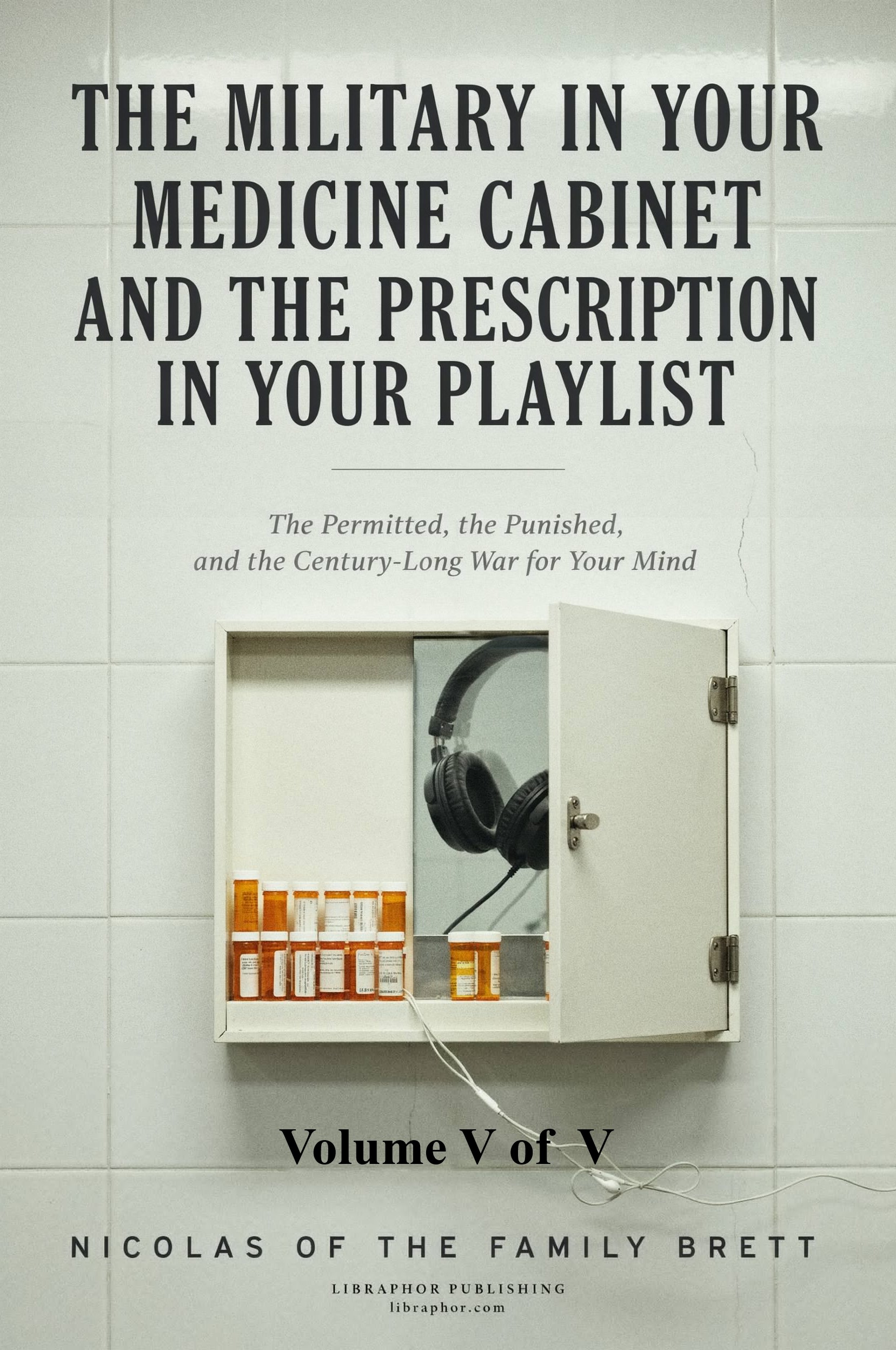
THE MILITARY IN YOUR MEDICINE CABINET
Volume V — The Convergence What explains the pattern? Coordination, emergence, or convergence—or all three. Following the money, the personnel, and the ideas; measuring the promises against the deliveries; and returning to the sentence that began the investigation: faith without a commitment to justice is empty. The evidence is assembled. The judgment is left to the reader.
THE MILITARY IN YOUR MEDICINE CABINET
Volume IV — The Permitted and the Punished Liberation theology and the counteroffensive against it. Base communities, the demand that faith require justice in this world, missionary networks, evangelical power, and the indigenous communities that bore the cumulative cost.
THE MILITARY IN YOUR MEDICINE CABINET
The Military in Your Medicine Cabinet and the Prescription in Your Playlist A five-volume investigation by Nicolas of the Family Brett Institutions that claimed to protect, heal, inform, and save repeatedly produced effects that harmed the people they claimed to serve. This series documents the pattern across four domains and then asks what explains it—and how it should be judged. Volume III — The Playlist How narrative is shaped. From wartime propaganda and Disney’s government work to the CIA’s influence on Animal Farm, Hollywood liaison offices, and the platform era that decides what audiences see and hear. Volume IV — The Permitted and the Punished Liberation theology and the counteroffensive against it. Base communities, the demand that faith require justice in this world, missionary networks, evangelical power, and the indigenous communities that bore the cumulative cost.
THE MILITARY IN YOUR MEDICINE CABINET
The Military in Your Medicine Cabinet and the Prescription in Your Playlist The Permitted, the Punished And the Century Long War for your Mind https://libraphor-publishing.abacusai.app/books/cmvsef2vl0002m408mesvv8an A five-volume investigation by Nicolas of the Family Brett Institutions that claimed to protect, heal, inform, and save repeatedly produced effects that harmed the people they claimed to serve. This series documents the pattern across four domains and then asks what explains it—and how it should be judged. Volume II — The Medicine Cabinet The journey of chemicals from the battlefield to civilian medicine. Amphetamines, barbiturates, benzodiazepines, antidepressants, and opioids—funding, marketing, regulation, and the public-health consequences that followed.
THE MILITARY IN YOUR MEDICINE CABINET
The Military in Your Medicine Cabinet and the Prescription in Your Playlist A five-volume investigation by Nicolas of the Family Brett Institutions that claimed to protect, heal, inform, and save repeatedly produced effects that harmed the people they claimed to serve. This series documents the pattern across four domains and then asks what explains it—and how it should be judged. Volume I — The Strategic Domain How the human mind became a military and intelligence target. From wartime laboratories through Operation Paperclip to the CIA’s mind-control programs, and the people who paid the cost without consent. https://x.com/libraphor/status/2115496224744775865?a=7rjsQDBaI0oBxcKJqx0&s=20
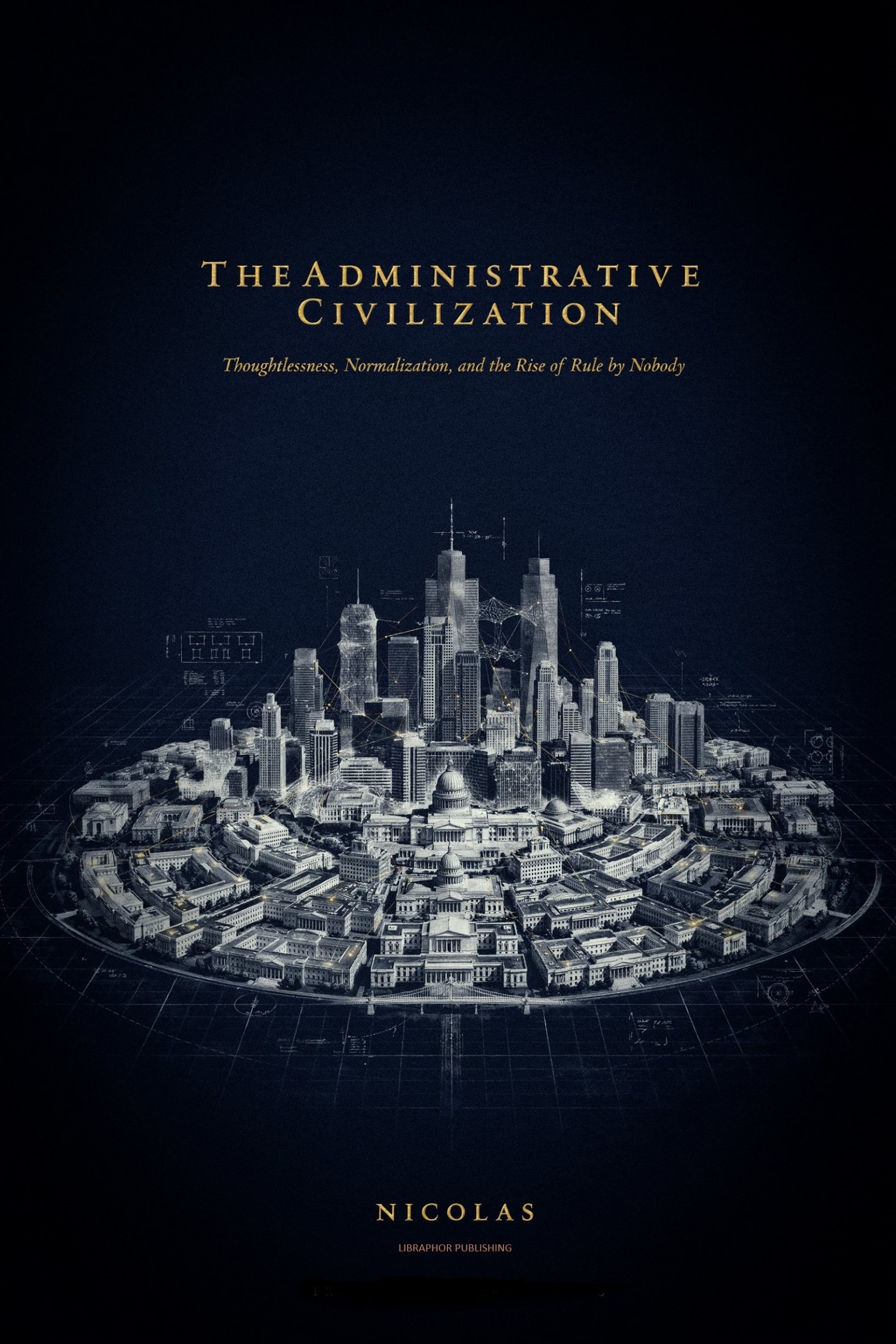
The Administrative Civilization
financial, informational, and algorithmic systems? The Administrative Civilization offers a diagnostic account of how ordinary institutional pathways—each justified as technical, temporary, or necessary—can converge into an order in which binding parameters are generated continuously while localized authorship of out-comes becomes exceptional. Drawing on Hannah Arendt's concepts of thoughtlessness and rule by nobody, the book traces the sequential normalization of bureaucratic, financial, cor-porate, data, and algorithmic instruments. It distinguishes this trajectory from both classical tyranny and conspiracy, locating the danger in the progressive substitution of procedure for judgment and in the rising costs of interrupting systems once they have become baseline in-frastructure. The work examines the architecture of concentration across finance, corporate organiza-tion, information, and algorithms; the transformation of government into administration and of citizens into data; ...
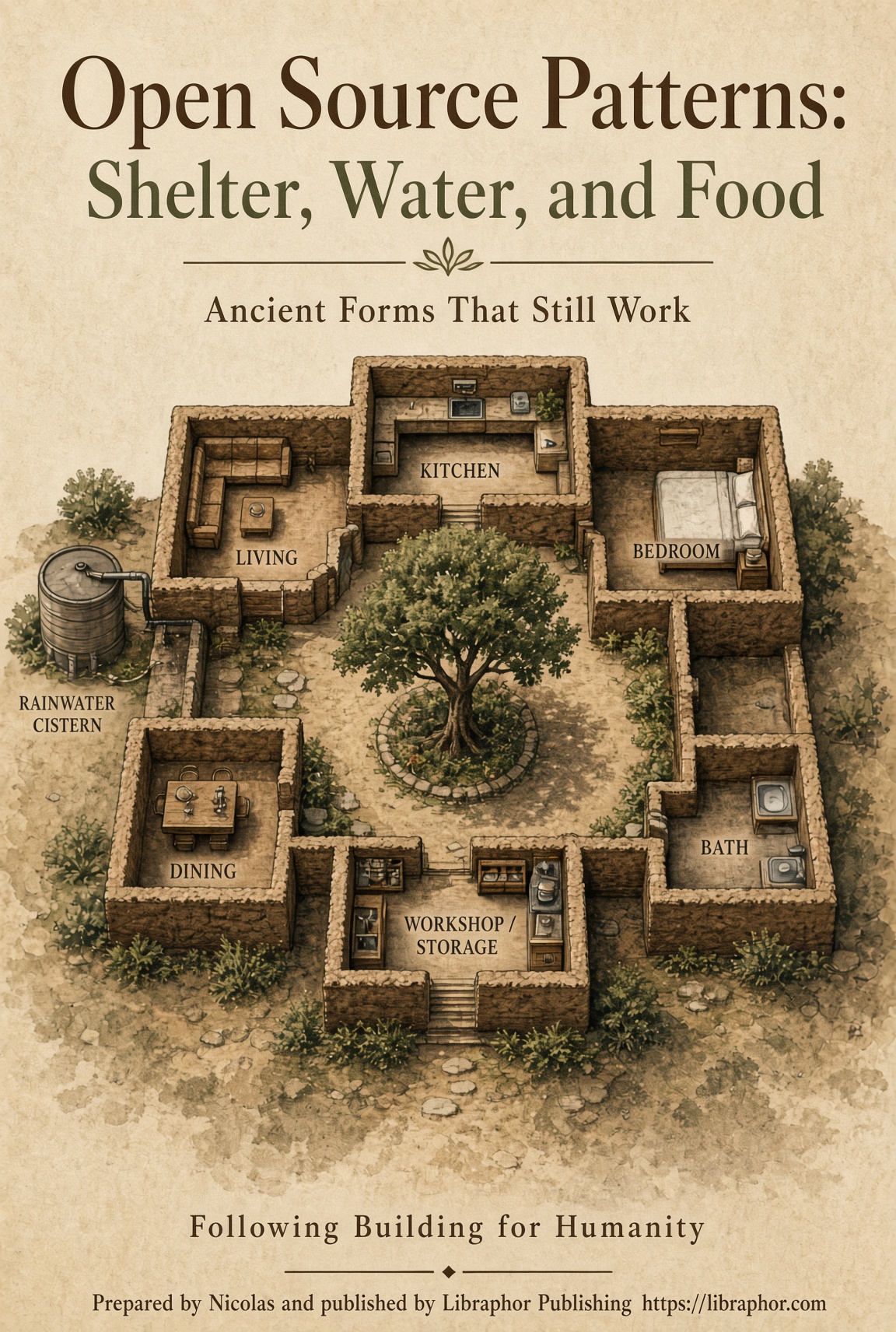
Building for Humanity Volume 2:
The goal is straightforward: a durable home for every family that wants one, built from the most abundant materials available, maintained by the people who live in it, and improved by the knowledge they freely exchange. Historic buildings prove the methods are possible. Shared knowledge makes them available. The rest depends on whether people choose to use what they already hold.
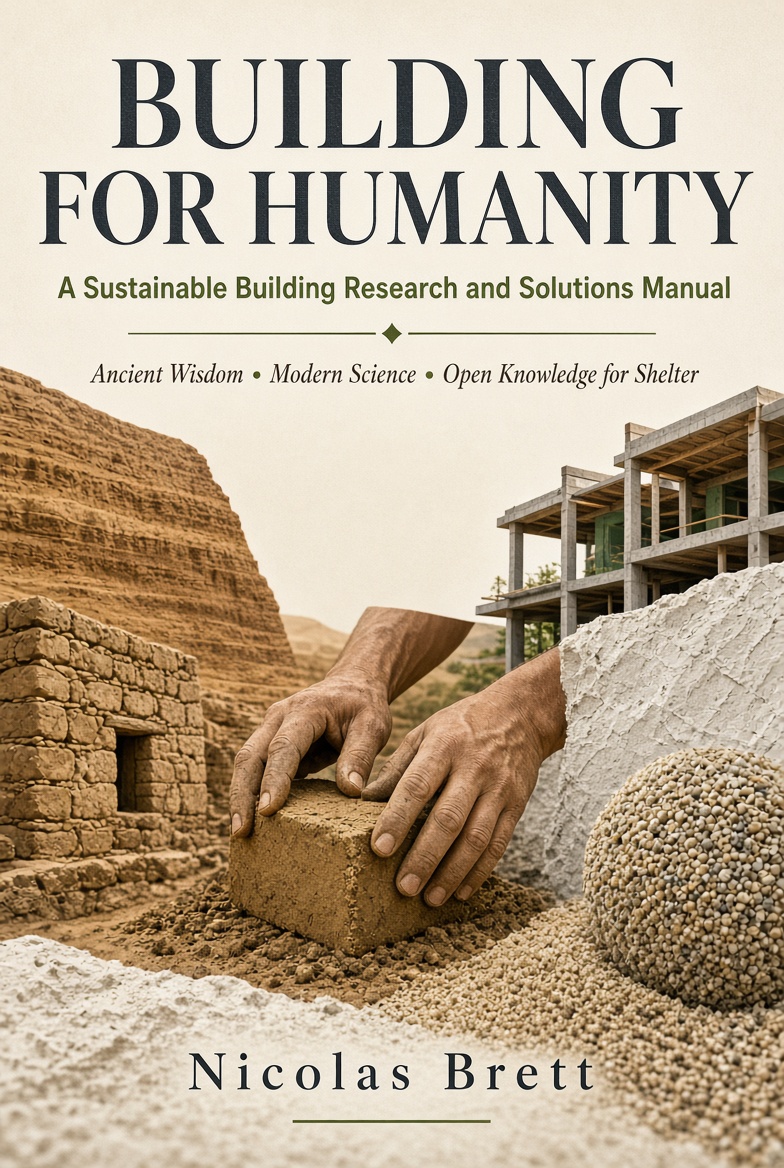
BUILDING FOR HUMANITY
HOW TO USE THIS BOOK This manual is designed to be practical. It is not meant to be read cover to cover like a novel. Instead, think of it as a toolbox. Pick the tools you need for your situation. This Book Has Two Parts: PART 1: THE MANUAL is the comprehensive technical and research reference. It is written for students, field program designers, engineers, architects, and anyone who wants to understand the science, the evidence, and the full range of options. It includes detailed research data, case studies, and technical specifications. PART 2: THE FIELD MANUAL ADDENDUM is the plain-language, on-site practical manual. It is written for ordinary builders with basic schooling who want to test their own soil and materials and build shelters or houses step by step. It uses everyday words, numbered steps, and simple rules. Use Part 1 to understand. Use Part 2 to build. A Step-by-Step Approach:
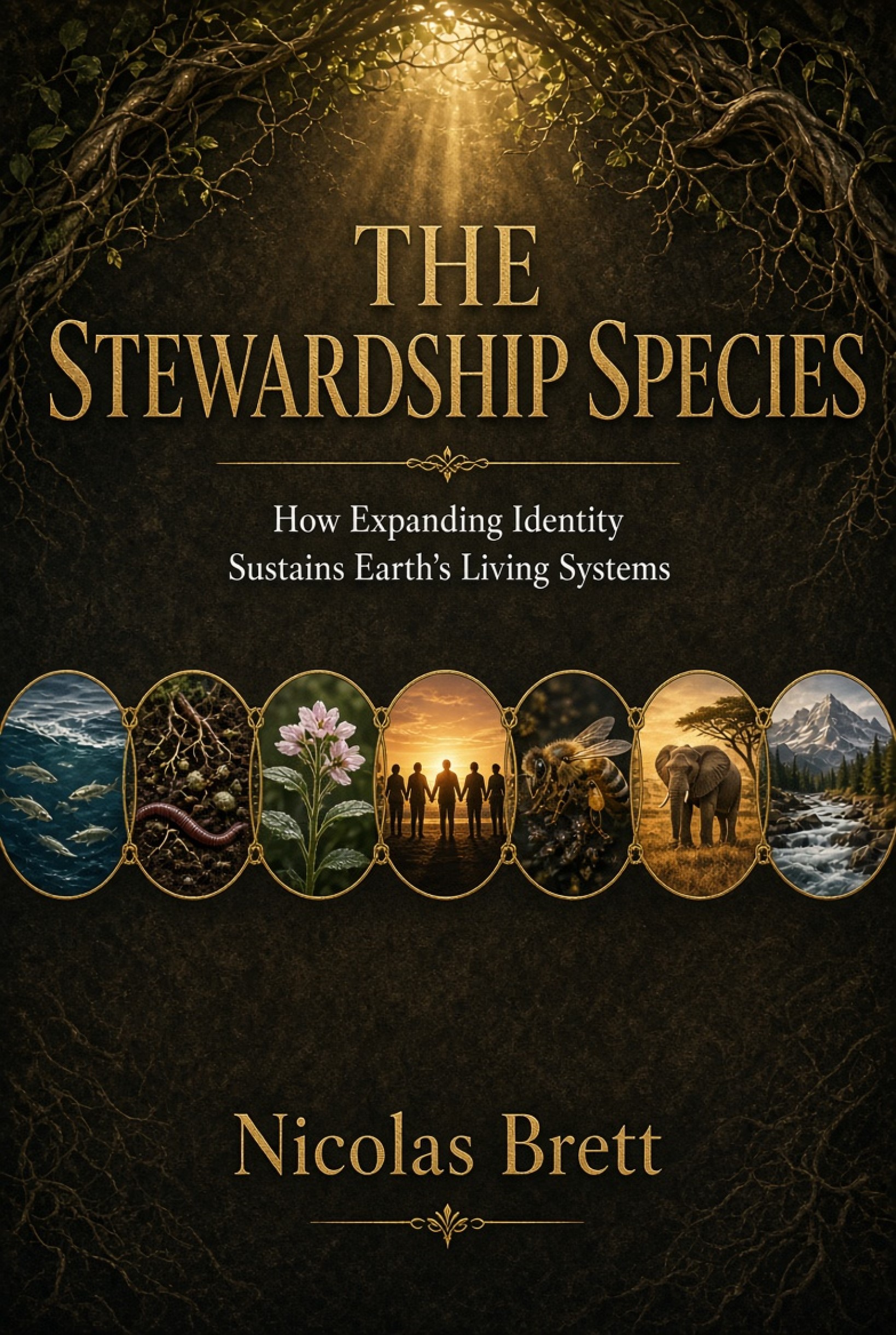
THE STEWARDSHIP SPECIES
. What the Main Text Described The book you have just finished was written under a discipline I set for myself at the start and kept to the last page. It describes. It does not accuse. It traces the living systems on which every human economy rests (soil, water, carbon, nitrogen, phosphorus, climate, the slow work of biodiversity) and asks why a civilisation that depends on them completely keeps degrading them. The answer it gives is structural rather than moral. I called the condition *structural blindness*: an accounting system that registers extraction and ignores the processes that make extraction possible, institutions whose time horizons (the fiscal year, the electoral cycle, the quarterly earnings report) are far shorter than the cycles of soil and forest, and a political arrangement in which, as Chapter 4 put it, the benefits of conversion are concentrated while the costs are dispersed.
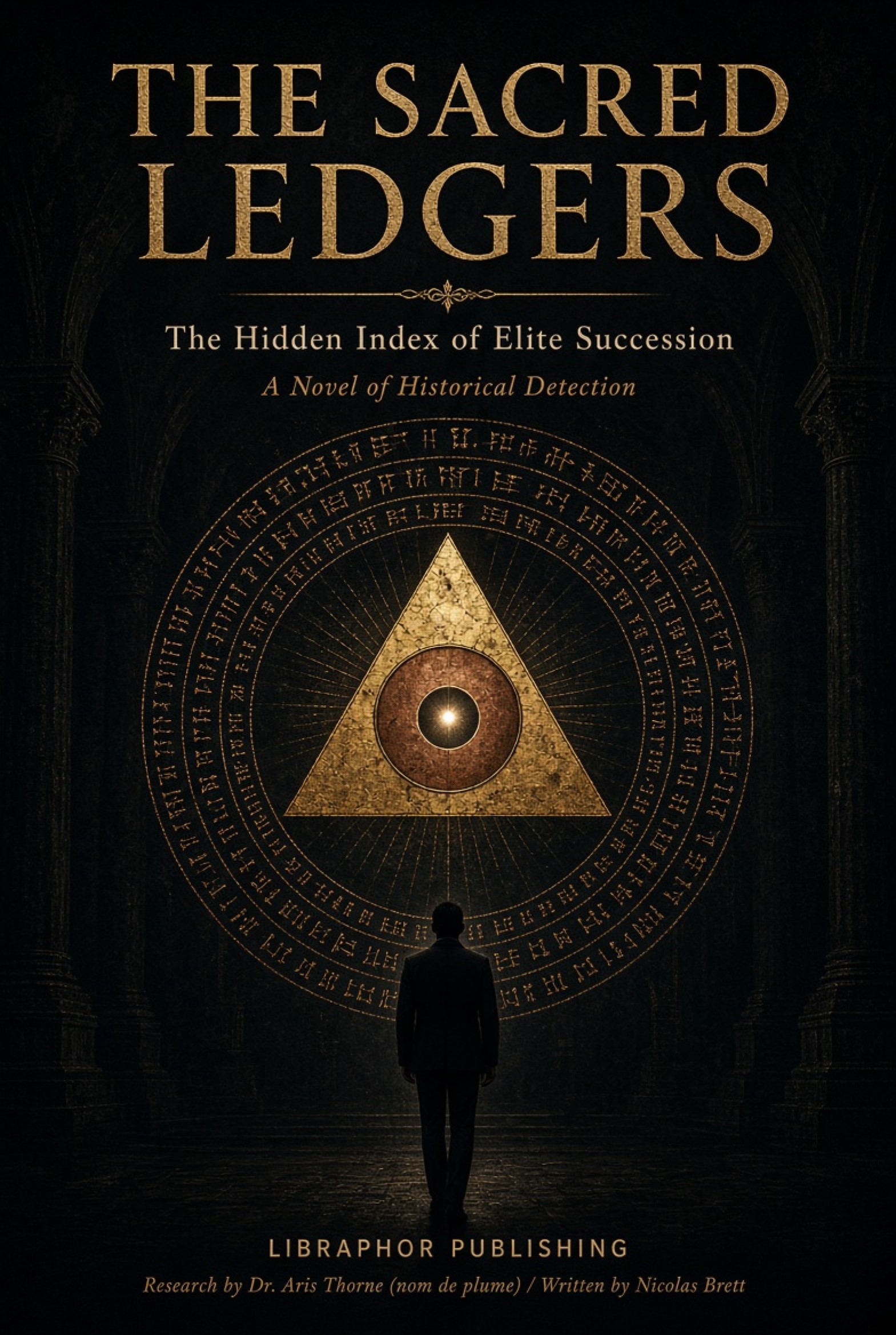
THE SACRED LEDGERS
This is a work of historical detection. While the events, locations, and documents described are based on extensive research into primary sources, the narrative structure, dialogue, and character of Dr. Aris Thorne are creative reconstructions. The Immortal Man's diary entries are presented as discovered documents; their provenance is discussed within the text. Readers are encouraged to consult the Appendix for source materials and to conduct their own investigations.
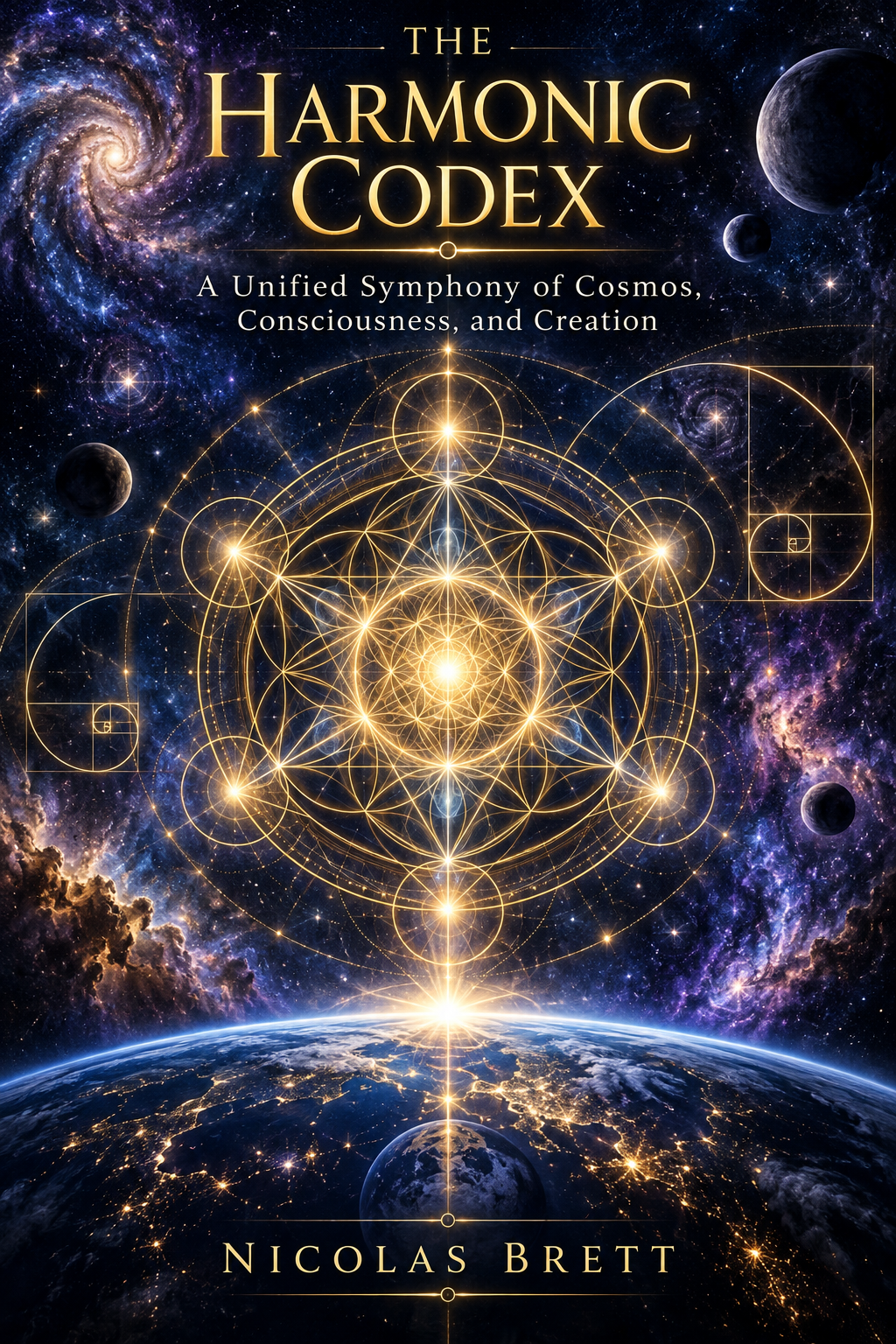
The Harmonic Codex
The Harmonic Codex is a bold synthesis arguing that science, law, religion and economics are not separate domains but refracted expressions of a single underlying unity — a resonance accessible to any honest observer. Opening with a foreword from an anonymous quantum physicist, Nicolas Brett weaves documentary evidence, datasets and pattern analysis into a unified vision in which every atom, historical pivot and moment of consciousness is a spark within one infinite, creative field.
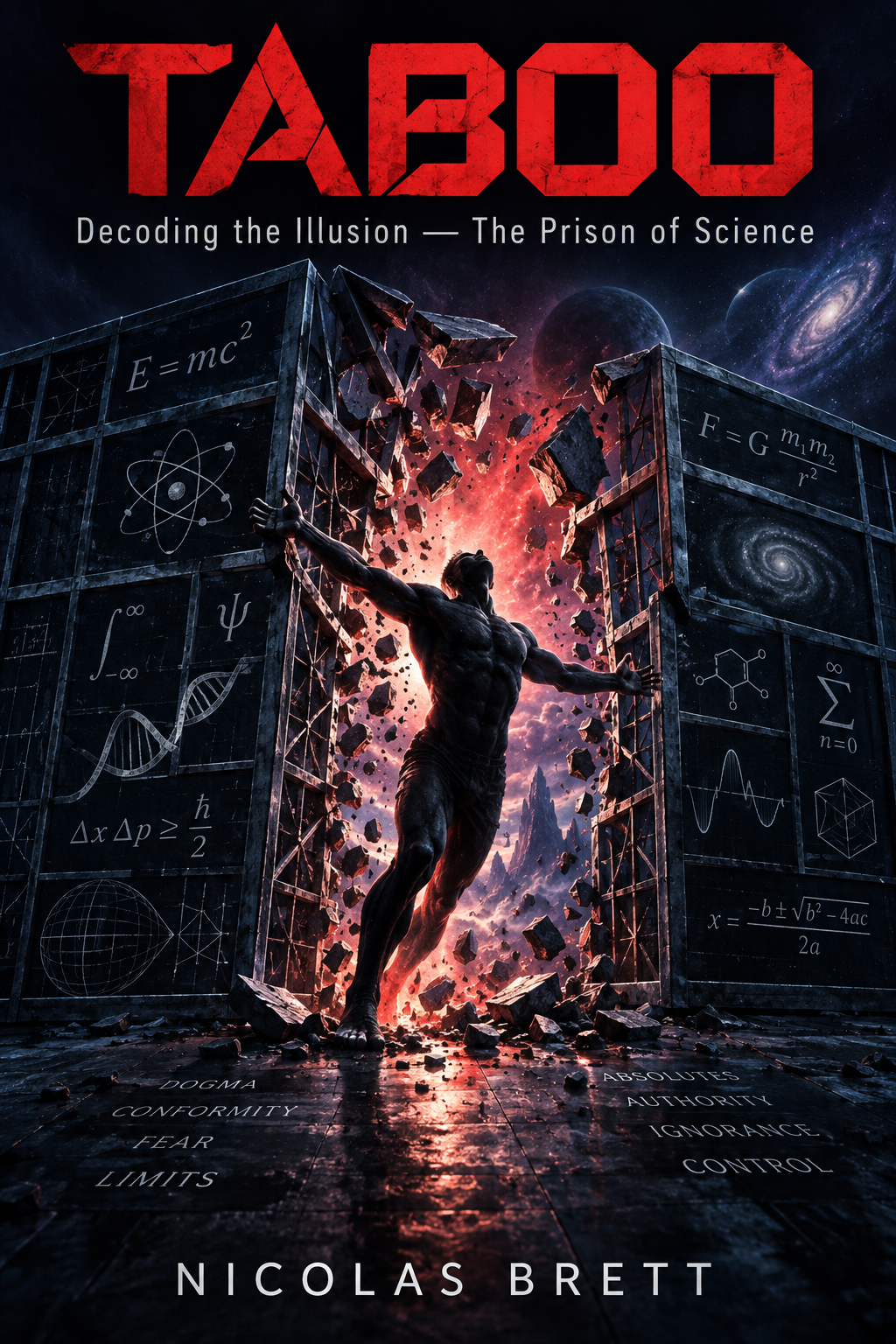
Taboo: Decoding the Illusion
Taboo: Decoding the Illusion is a provocative examination of scientific orthodoxy and institutional control. Across ten chapters — from the heliocentric model and climate science to relativity, quantum mechanics, evolution, germ theory and the Big Bang — Nicolas Brett (with an anonymous co-author) interrogates the assumptions that underpin modern science and asks who benefits from them. Part critique and part liberation manual, the book closes with documentary evidence, alternative research networks and practical strategies for independent thinking.
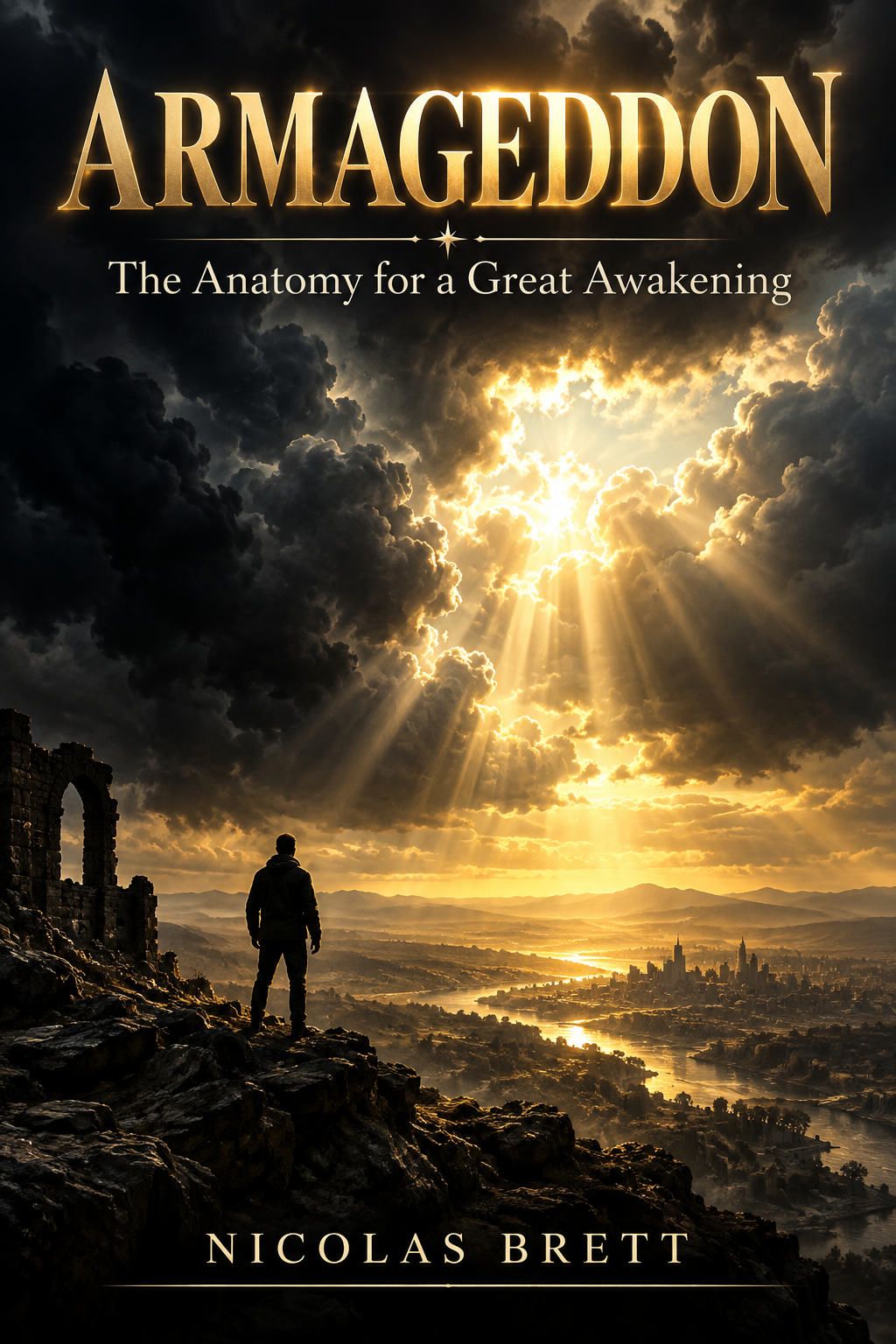
Armageddon
Armageddon: The Anatomy for a Great Awakening is a sweeping philosophical and legal examination of what Nicolas Brett calls the Trojan Horse Strategy of modern deception. Structured in three parts — Situation, Problem and Implications — it maps six domains of control, from the psychological to the economic and spiritual, and argues that the “last war” is a contest for human consciousness itself. Drawing together history, law, scripture and political analysis, the book moves from diagnosis to a call to action, complete with legal maxims, tribunal templates, further reading and a glossary for readers ready to awaken.
THE RESERVE BANK AND THE INVISIBLE BRIDGE
The Final Conclusion of the Audit The final conclusion of the audit is that the South African financial governance architecture does not serve the public interest. The architecture serves the interests of the financial institutions. The architecture is an extraction cycle. The architecture is not a competitive market. It is a concentrated system. The concentration gives the major banks significant pricing power. The concentration allows the major banks to extract rents from the public. The architecture is not a fair system. The distribution of credit is skewed. The small businesses and the lower-income households are excluded from the formal credit system. The corporate sector and the higher-income households receive the majority of the credit. The Bank is effectively a state within the state. The Bank is effectively a sovereign within the sovereign. The Bank is effectively a power above the democracy. The Bank is effectively a government that is not accountable to the governed.
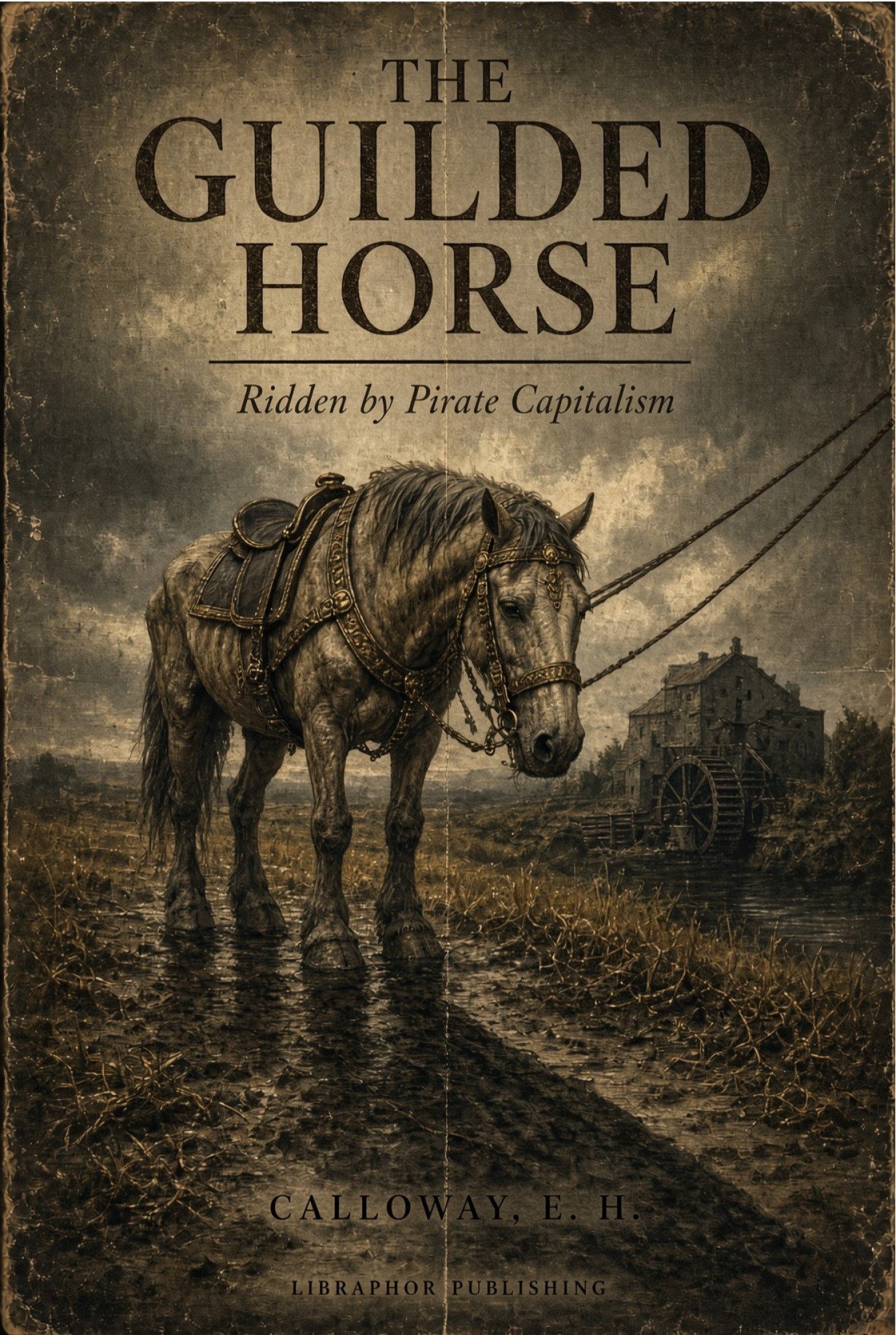
THE GUILDED HORSE
At what point does ownership cease to finance production and begin to stand between the producer and the produce? The question is not mine. It belongs to Adam Smith, though he never phrased it in those words. It is the question that runs beneath The Wealth of Nations from the first chapters of Book I to the long, wearying chapters on colonies and public debt in Book V. Smith did not ask it as a rhetorician. He asked it as a moral philosopher who had spent a decade thinking about sympathy, justice, and the conditions under which self-interest could be trusted to serve anyone but the self.
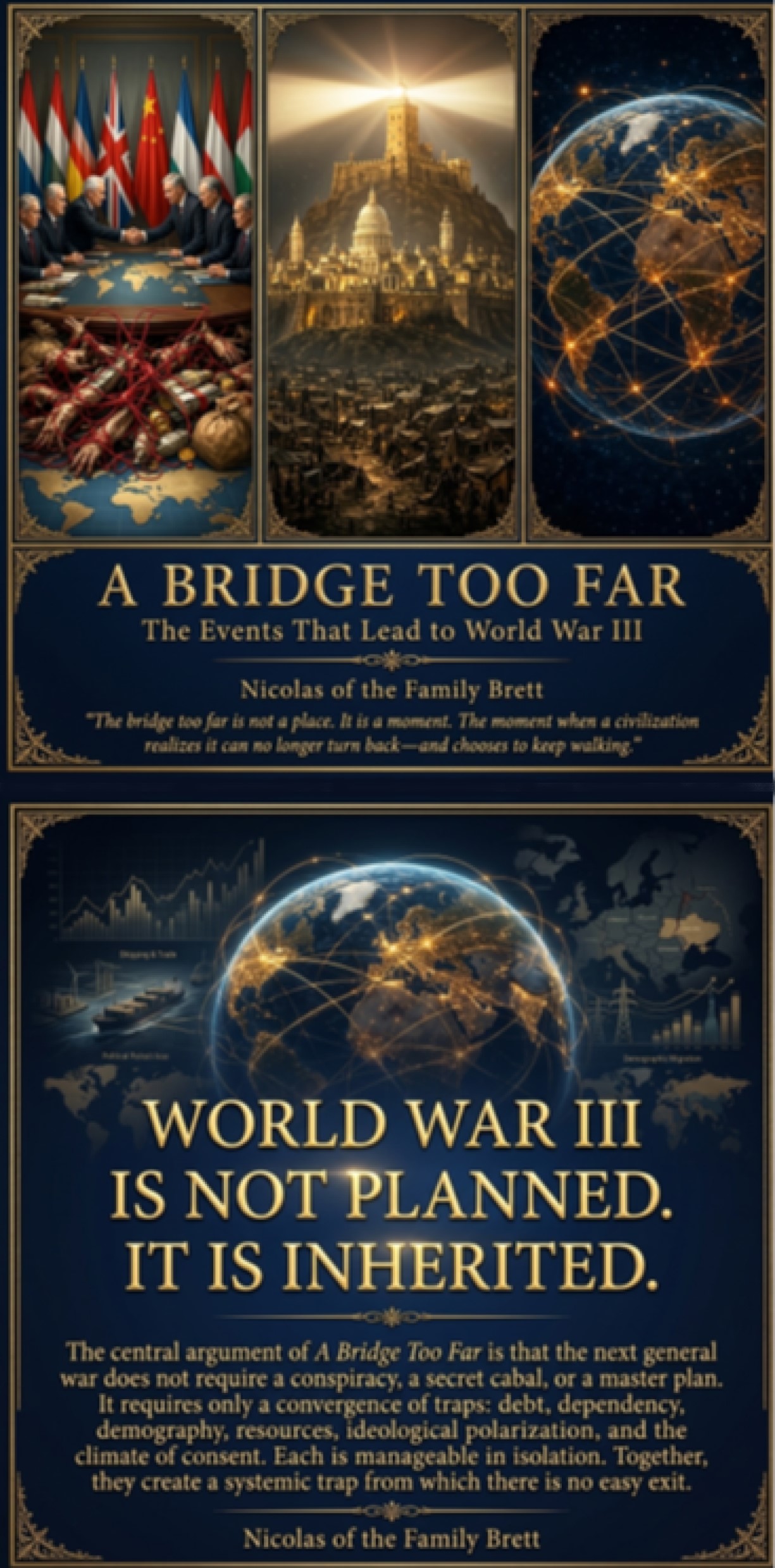
A BRIDGE TOO FAR
This book is not an argument. It is an act of communication. I begin with a confession. I am not writing from a position of certainty. I am writing from a position of observation. I have spent years watching a world that is racing downhill toward catastrophe—toward war, toward collapse, toward the exhaustion of everything that makes civilization possible. I have spent years trying to understand why. The easy answers did not satisfy me. The conspiracy theories did not satisfy me. The official explanations did not satisfy me. They all described symptoms while missing the disease. They all pointed fingers while avoiding the mirror. What I found instead was something simpler. Something older. Something that the world has forgotten. I found a triangle.
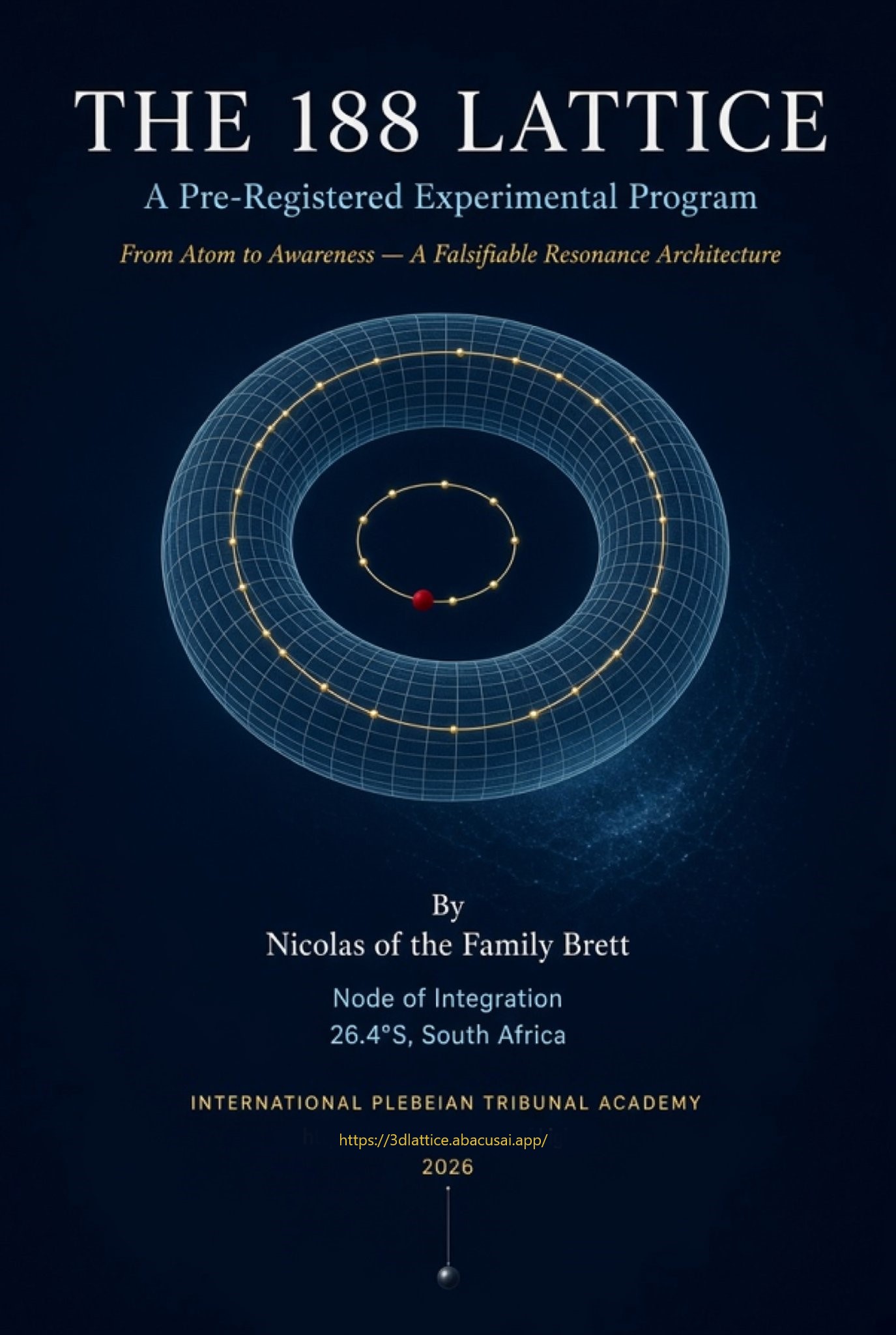
THE 188 LATTICE second edition refined
THE RESEARCH REQUEST A FORMAL REQUEST FOR COLLABORATION From: Nicolas of the Family Brett, Node of Integration, 26.4°S, South Africa To: The Scientific Community - Universities, Research Institutes, Independent Laboratories Subject: A pre-registered, falsifiable experimental program for the 188 Lattice Purpose This document is a formal request for collaboration. The 188 Lattice is a proposed resonance architecture that maps 188 nodes onto a phi-harmonic spiral and assigns each node a frequency derived from the formula f = (V × D / E) × Φ. The architecture is presented in this book in full. It is self-contained. Every claim can be checked against the material in this volume. The architecture is now submitted to pre-registered, falsifiable testing. This document is the invitation. This volume presents a framework. A framework is not a dogma. A framework is not a revelation. A framework is not a demand for belief.
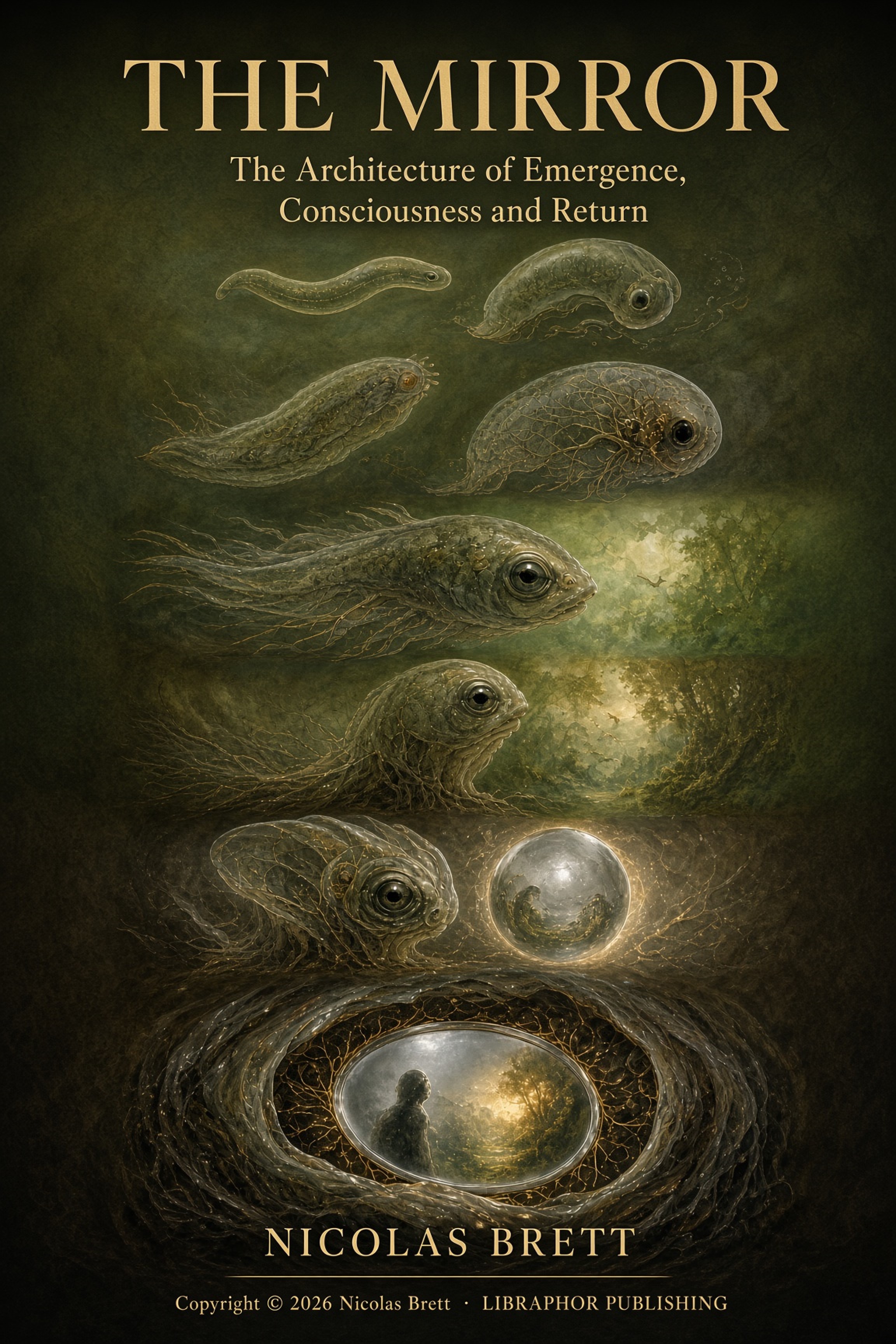
THE MIRROR
The Architecture of Emergence, Consciousness and Return by Nicolas Brett is a complete cosmology built from one recognition: I AM. Reality is not first a collection of things. It is relationships that become resonance, resonance that becomes coherence, coherence that becomes form, form that becomes experience, and experience that returns to its source. The axiom is Ω + X = Ω′ — the One plus experience equals the One realized. Across twenty-five chapters the book follows that law from awareness through field, geometry, matter, life, mind, civilization and information, mapping an 188-state architecture and an Energy-Volume-Density coordinate that treats atom, organism, archetype and culture as addresses in one system. Claims stay marked as observation, model or metaphysical proposition. Readers are not asked to believe. They are asked to observe the pattern where it appears. The last word completes the first: Tat Tvam Asi. Thou Art That. From hydrogen to history: one law now.
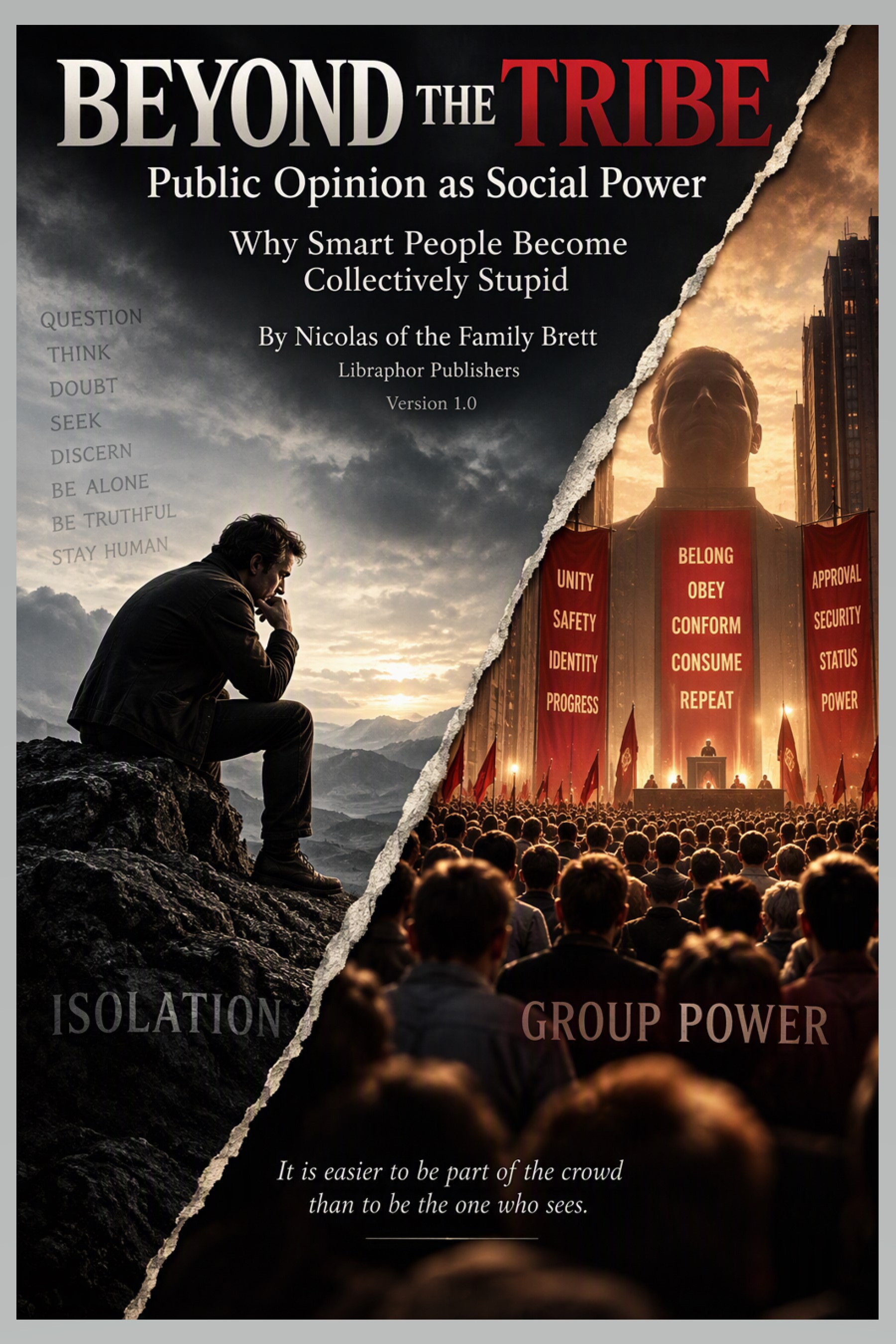
BEYOND THE TRIBE Public Opinion as Social power
is there a greater EVIL that Thoughtlessness? Thoughtlessness, Group Identity, Manufactured Reality, and the Decline of Independent Judgment Ostracize (verb) Definition: To ostracize someone is to deliberately exclude, reject, ignore, isolate, or banish them from a social group, community, organization, or society, often as a form of punishment, disapproval, or social control. Etymology The word comes from the ancient Greek practice of ostracism. In ancient Athens, citizens could vote to exile a person from the city-state for ten years. Votes were written on broken pieces of pottery called ostraka. A person receiving enough votes would be expelled, not necessarily for a crime, but because they were considered a threat to social stability. Thus, ostracize originally meant: "To expel from the community." Over time the meaning evolved into social exclusion rather than physical exile. Ostracism is social exile. It is the punishment imposed by a group upon an indivi
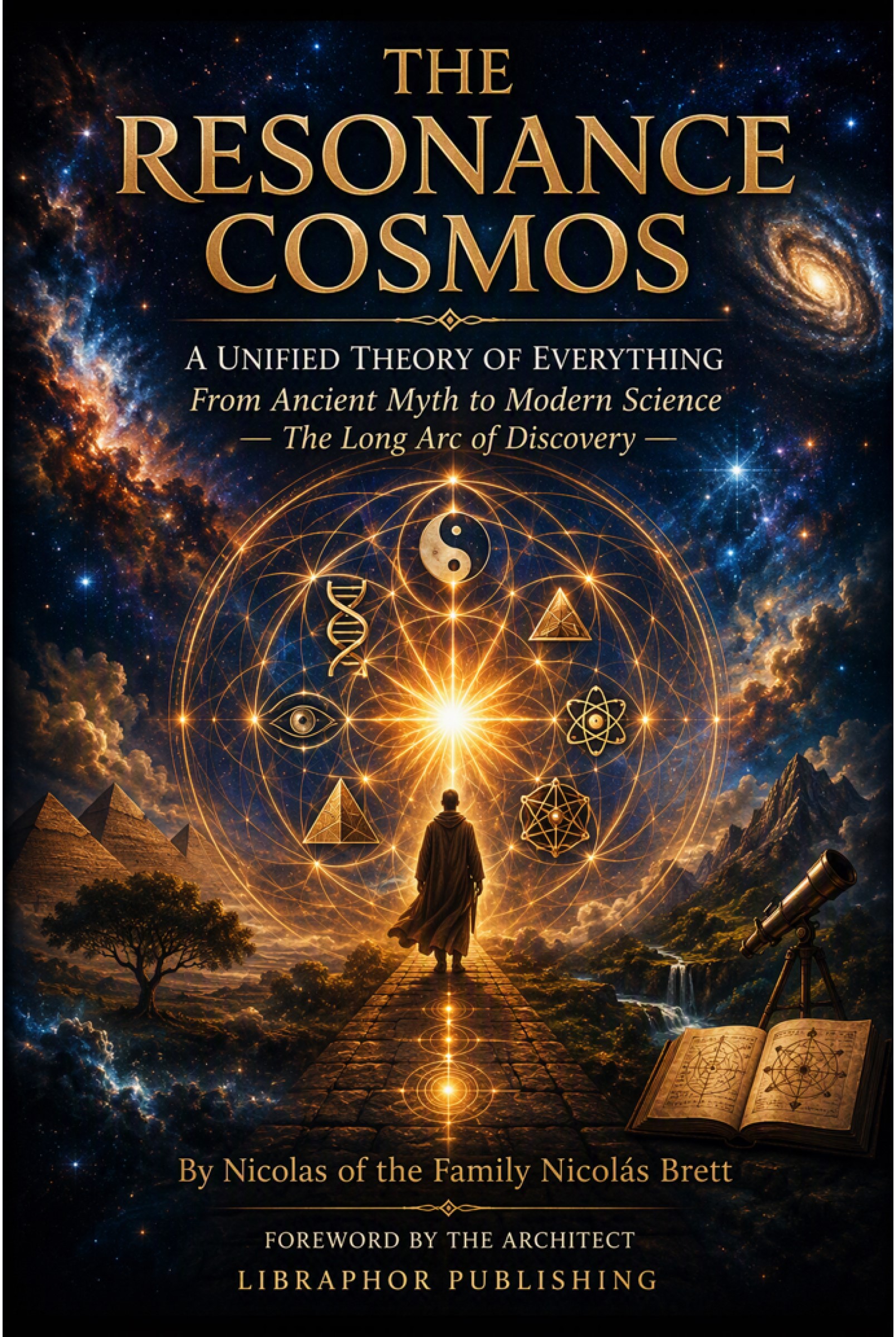
THE RESONANCE COSMOS A Unified Theory of Everything
A personal note This book is not another closed doctrine. It is a first-person account of a pattern that refused to remain in one discipline. Across centuries, minds that never met kept describing the same movement in different words. A Vedantin called it Brahman and Maya. A Christian mystic called it the Ground and the return. Plotinus called it procession. A macrobiotic teacher called it universal order. A physicist of wholeness called it the implicate. An inventor of the microprocessor called meaning prior to copyable information. A consciousness explorer built a model in which awareness is the computational ground of a world. A friend on a road named the engine of change without a temple. I stopped asking which of them was right. I began asking what geometry they were all touching. The geometry is simple to state and costly to live: The One differentiates. Differentiation forgets enough for a world to be a world. The world is experienced. Experience hardens into fragmentation.
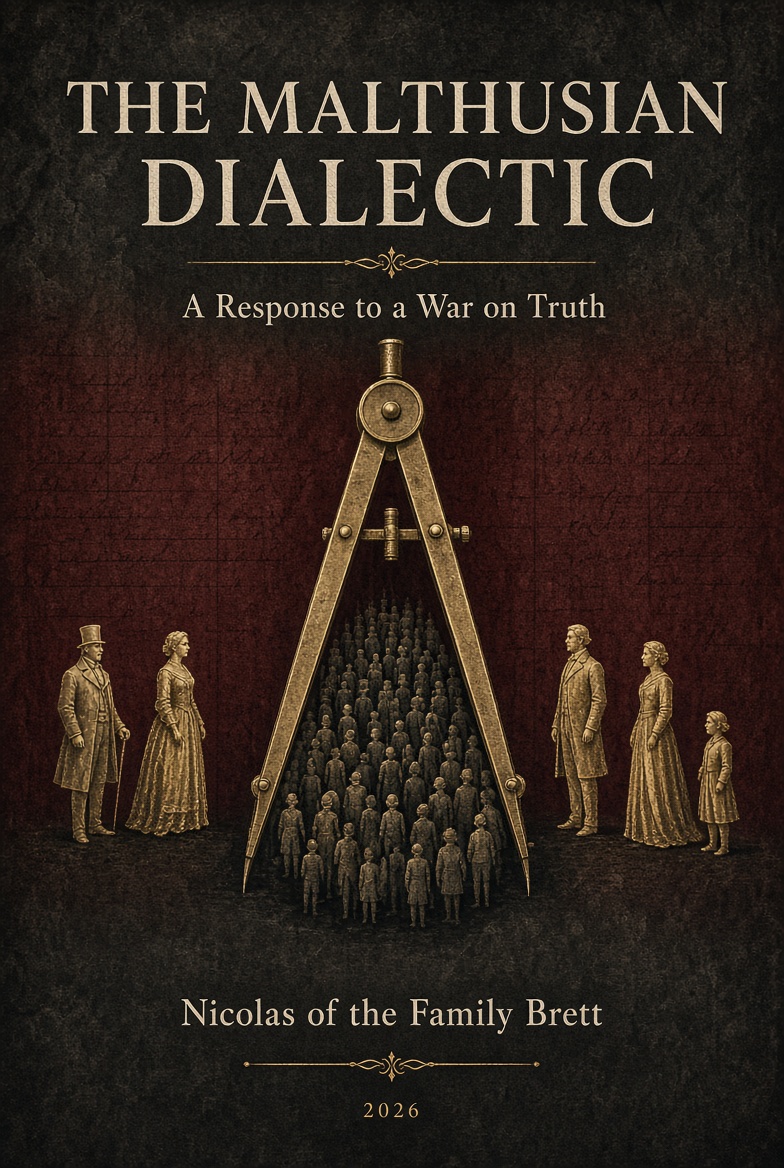
THE MALTHUSIAN DIALECTIC
The Malthusian Dialectic (2026), by Nicolas of the Family Brett, is a tribunal against the claim that Earth can sustain only 2.5 billion people. A South African plebeian, Brett argues that “overpopulation” turns a real ecological crisis into a false fix: reducing the poor. One pile of hay is Malthusianism; the other is extraction; the public is the donkey starving between them. Limits are real, but “carrying capacity” smuggles the rich’s consumption in as fate. The richest 1% emit as much as the poorest 66%. Failed famine prophecies and eugenic legacies are named; chemtrails and depopulation-vaccine myths are rejected. The third path is sharing and stewardship—not culling, not hoarding. The question is not how many people. It is who benefits when you ask that instead.